
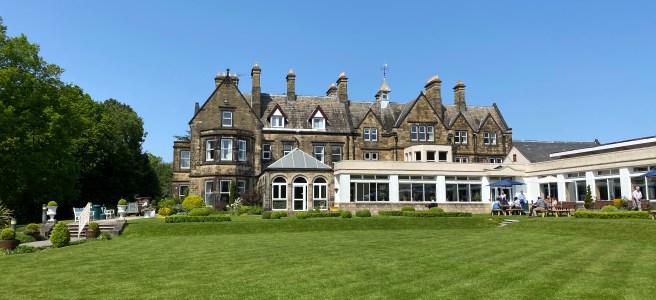
The Hayes Conference Centre, Swanwick, 22nd-24th May 2023
The 2023 CAS conference started with fantastic sunny weather and fine temperatures. Held at The Hayes Conference Centre in Swanwick (@CCT_Conferences), the weather meant that we could make good use of the beautiful gardens and outside seating. Our chair, Dr Jonathan Bush, opened the conference with welcome and the AGM. Many thanks went to our outgoing treasurer, Eileen Head, for all her hard work and we welcomed new treasurer elect, Jon Purcell, former Head Librarian at Durham University. We also thanked our out-going secretary, Karen Laura O’Conner, for all her service to the society and welcomed Claire Marsland who is taking on the role.
The first keynote speaker of the conference was Dr Carmen Mangion, historian and patron of the CAS, who spoke about oral history in practice. Dr Mangion discussed both the benefits and drawbacks of oral history, which is increasingly being used as a tool to record the histories of religious orders, particularly those heading towards completion. Oral history can be used to communicate facts but also experience, knowledge and emotions, and capture individual perspectives of events. However, care should also be taken when considering the reliability and representativeness of oral histories.
“Oral history can help unpick ‘socially shared experience’ and individual memory”
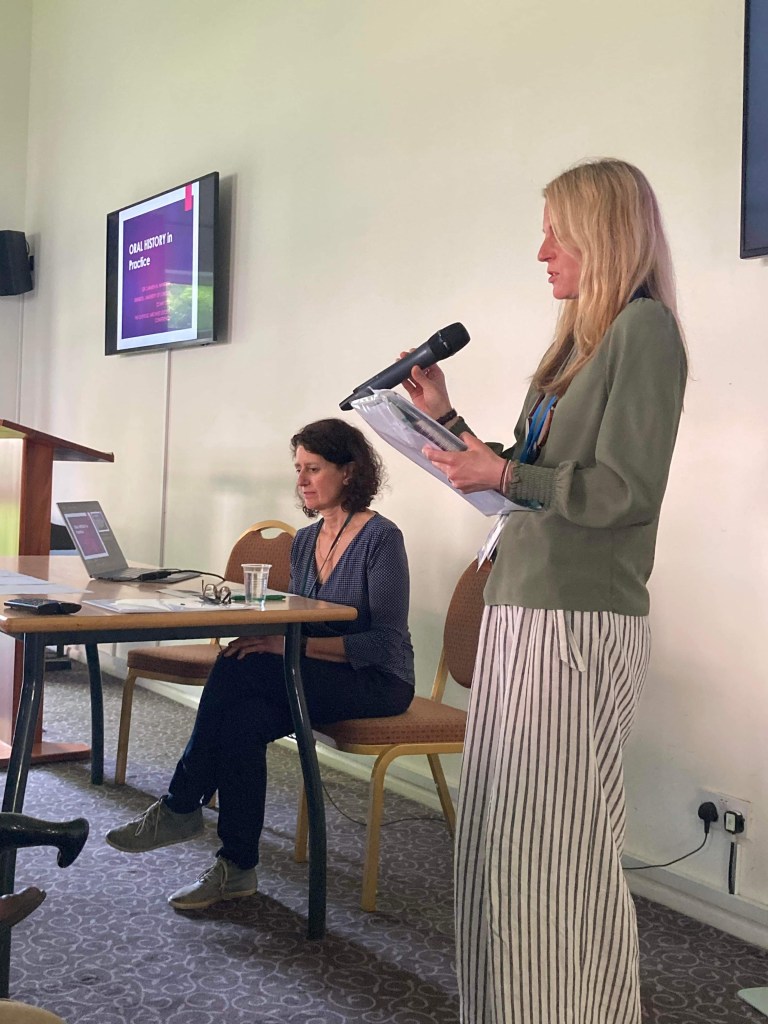
For more information on Dr Mangion’s work see: https://historyofwomenreligious.org/carmen/
Tuesday morning’s speakers kicked off with Joanne Halford, archivist for the Franciscan Missionaries of the Divine Motherhood. The Franciscan Centre, at Ladywell in Surrey, has been developed as a centre of Franciscan spirituality. The archives aid this by keeping alive the FMDM heritage and story. The redevelopment of the centre has allowed innovative museum display methods by Creative Core (@creativecore_uk) to be installed throughout the building which tell the story of FMDM and its history of mission. One of the interpretation methods was ‘Talking Heads’- a series of videos on an interactive screen with short films of the nuns answering questions about their experiences and motivations for joining religious life. An example of the practical application of oral history as referenced by Carmen the day before.

Another innovative display is an interactive mission map on an AV unit created to show the 44 different missions FMDM have been involved in.
Jo also discussed the challenges of the project like selecting the right images and label text and choosing the correct level of branding. The project also involved the adoption of Axiell collections software for the archive so that the collection could be appropriately catalogued.
For more information see: http://www.franciscancentre.org.uk
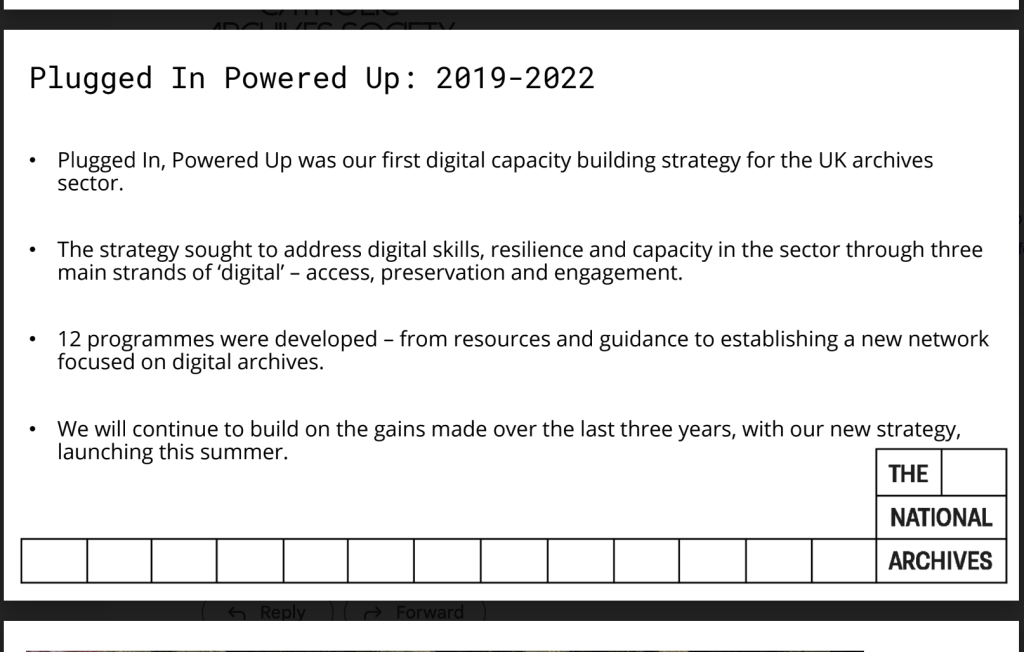
Our second session on Tuesday was by Caroline Catchpole, Digital Development Officer at the National Archives, with a talk titled: ‘Power Up! Getting started with digital preservation.’ Caroline addressed the way digital preservation can sometimes feel overwhelming and unclear as to where to begin. Digital material is complex and knowledge, skills and resources are often limited in archives across the UK.
Caroline referenced several useful resources which can help when learning about digital preservation: https://www.nationalarchives.gov.uk/archives-sector/projects-and-programmes/plugged-in-powered-up/advocacy-resources/ and The Theory and Craft of Digital Preservation by Trevor Owens (2018)

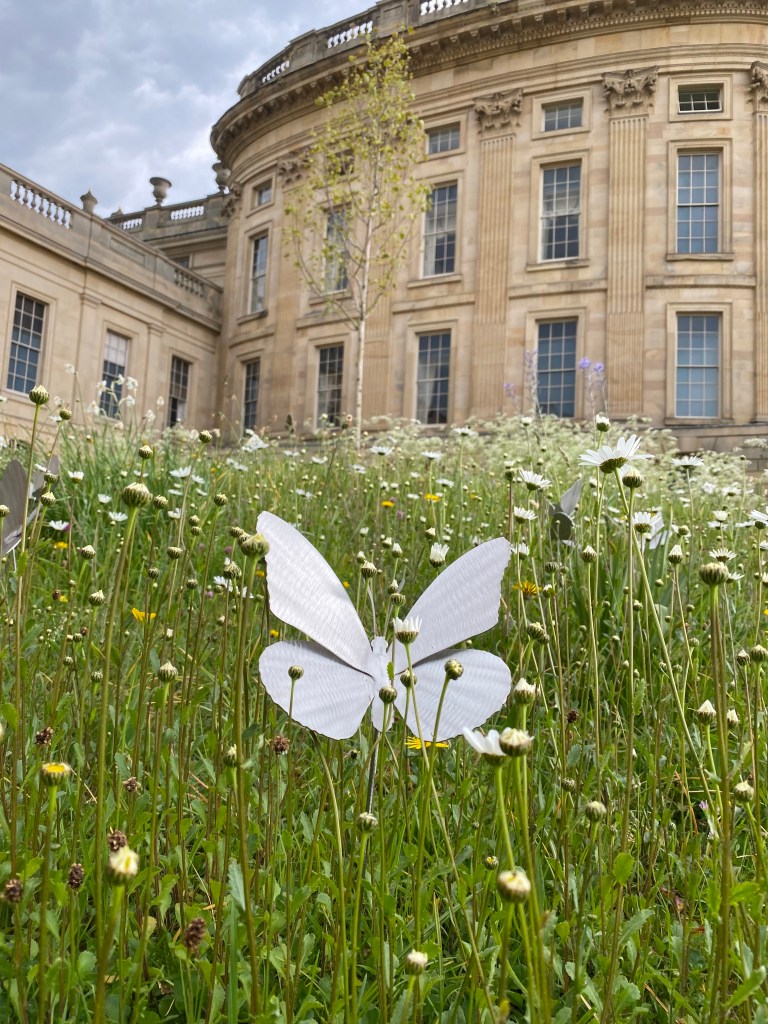
On the afternoon of Tuesday the conference delegation went on a very enjoyable excursion to Chatsworth House near Bakewell, the seat of the Duke of Devonshire. A tour, led by very knowledgeable tour guides, was organised for the group who all enjoyed the splendour of Chatsworth’s art and architecture.

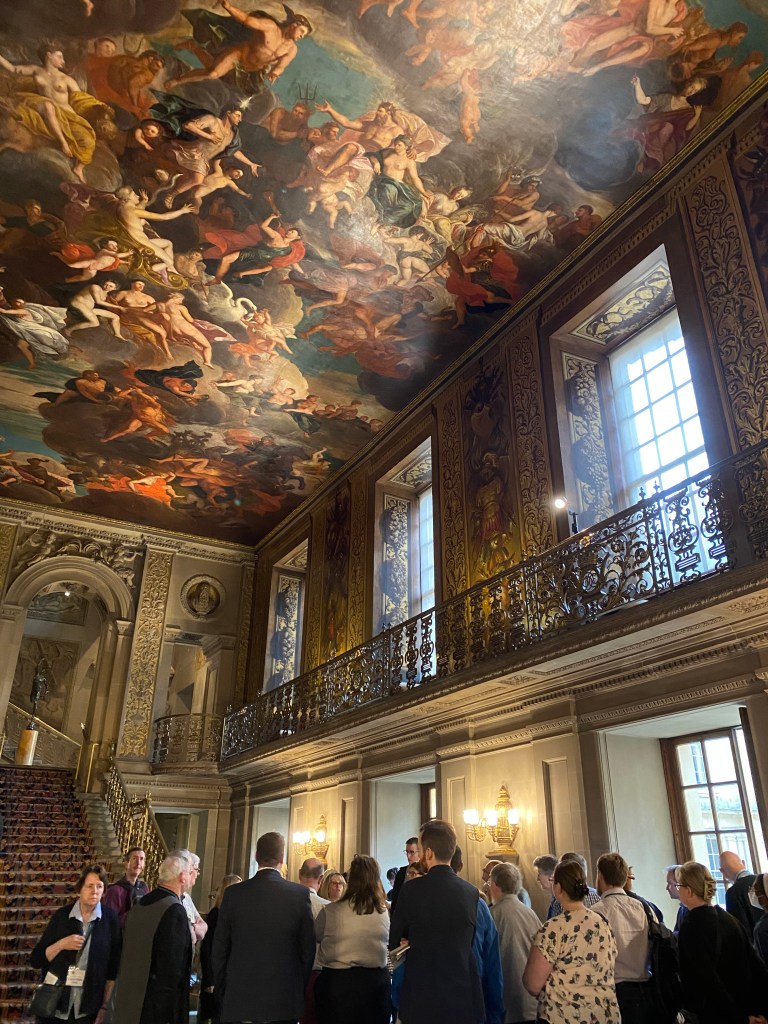
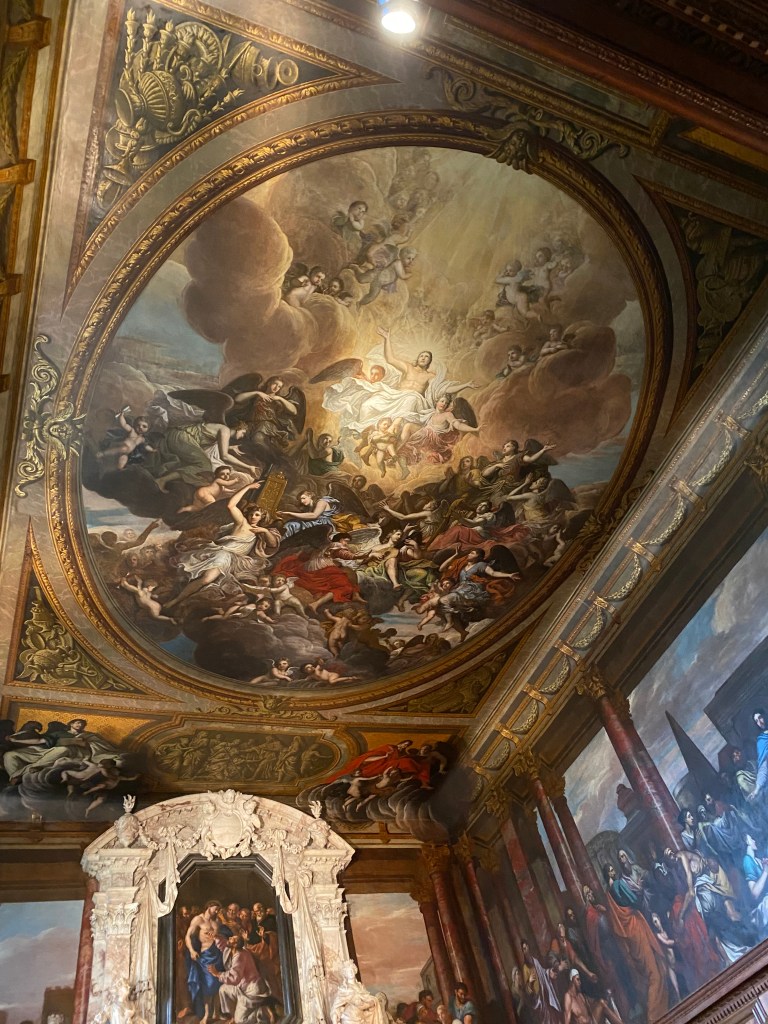
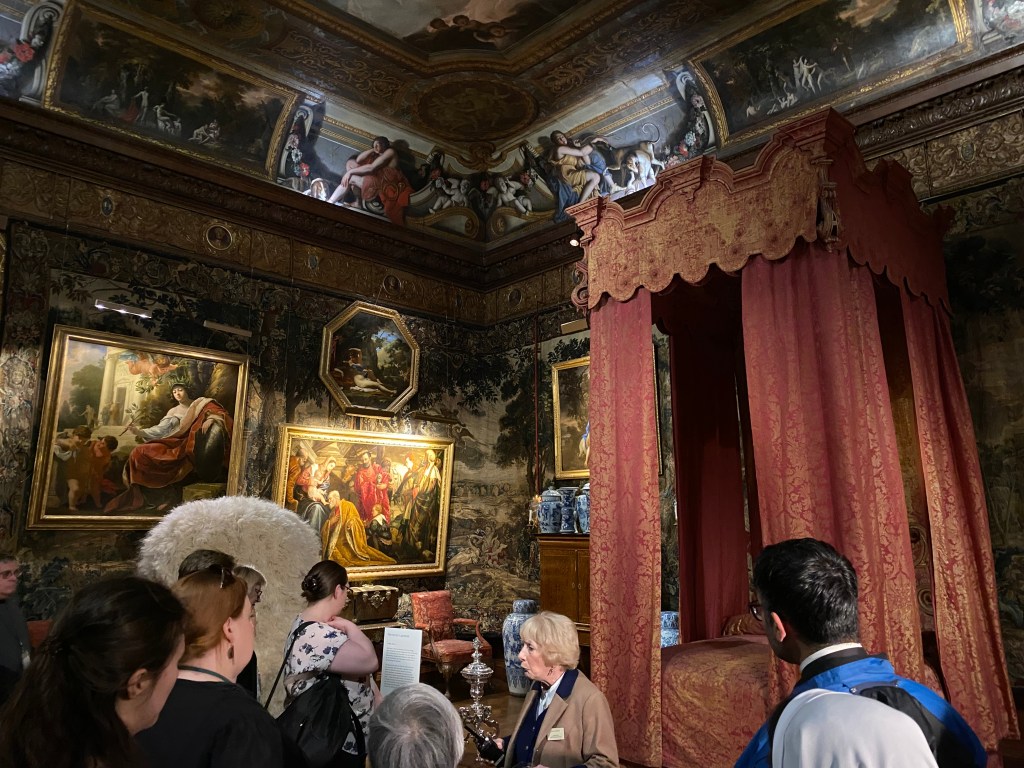
On returning from the afternoon outing, the conference split into three interest groups which covered specific topics. Thomas Henderson led one about the care of manuscripts in archival collections, Jenny Smith about engaging a wider audience with archives and Paul Shaw discussed the challenges surrounding the access to religious archives for cause papers.
On the final day the final talk was from our Chair, Dr Jonathan Bush on the future of archives of Catholic Religious Institutes. Jonathan highlighted that the Records of Catholic religious communities are at risk of loss due to declining membership and closures and no strategic plan is in place to mitigate this. Religious institutions sometimes hold important collections of British history and their preservation is very important, they can also often hold significant library and object collections which require different training and expertise to care for.

As part of his AHRC funded professional fellowship, Jonathan sent out surveys to religious order in order to get an overall picture of their storage, care, use and sustainability. The survey found that a significant percentage of custodians did not have the archives in store rooms protected from flood, fire or environmental damage. A large percentage also did not have a basic catalogue of their collections and only 8% have a fully costed plan for their archives in the case of closure in the next 10-20 years.
What can be done about this? Jonathan recommended a series of actions:
- Improve training for archivists of religious institutions
- Funding bodies should fund religious institutes archives
- Encourage all institutes to have a basic listing of the archive if not a full catalogue.
- Promote awareness of pragmatic preservation solutions e.g. portable temperature/ humidity readers
Going forward, the project will set up a repository working group in order to examine the feasibility of small scale centralised repositories across the UK, either independent or linked to larger religious or secular educational institutions.
For more information on the project see: Twitter @ArchiveCathInst
Final discussions of the #casconference2023 were in the Open Forum. A representative from each of the three interest groups summarised their discussions. Then Fr Anthony Dolan raised important questions about the challenges faced by Diocesan archivists who are also priests and thus are stretched with responsibilities and moved to locations far from the archives. This is an increasing challenge for Diocesan archives and something which may be discussed as a priority in the 2024 conference.
It was great to then hear from Dr Danny Michaels from @NewmanStudies who updated on the progress of the digital letters project and the advancement of the system which allows for the Optical Recognition System to search in multiple languages.
The conference ended with the celebration of Mass, thanks and lunch. We hope to see everyone again next year at High Leigh in Hertfordshire, 20-22 May 2024: https://catholicarchivesociety.org/training-events/conference-agm/conference-2024/
For more detail on the events of the 2023 conference see the social media threads on @CatholicArcSoc and the Catholic Archive Society Facebook group. For information about the 2024 conference please email: catholicarchivesociety@gmail.com

 catholicarchivesociety.org
Thanks ever so much for this report. A good reminder of the events and the Chatsworth visit.
LikeLike