

Liam Temple, Assistant Professor in the History of Catholicism, Durham University
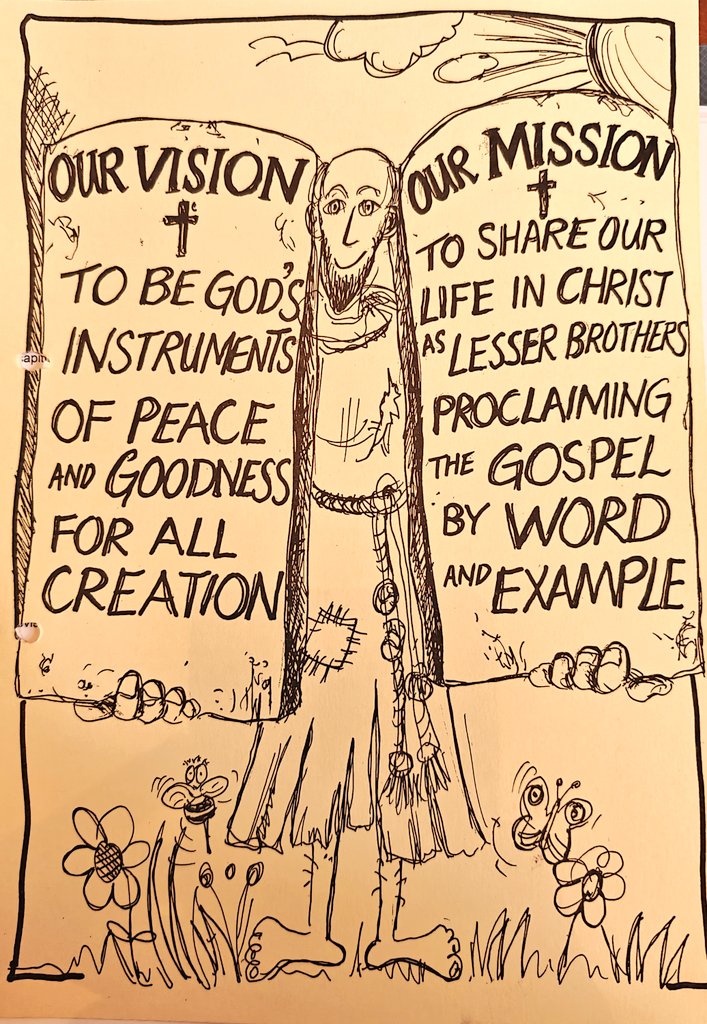
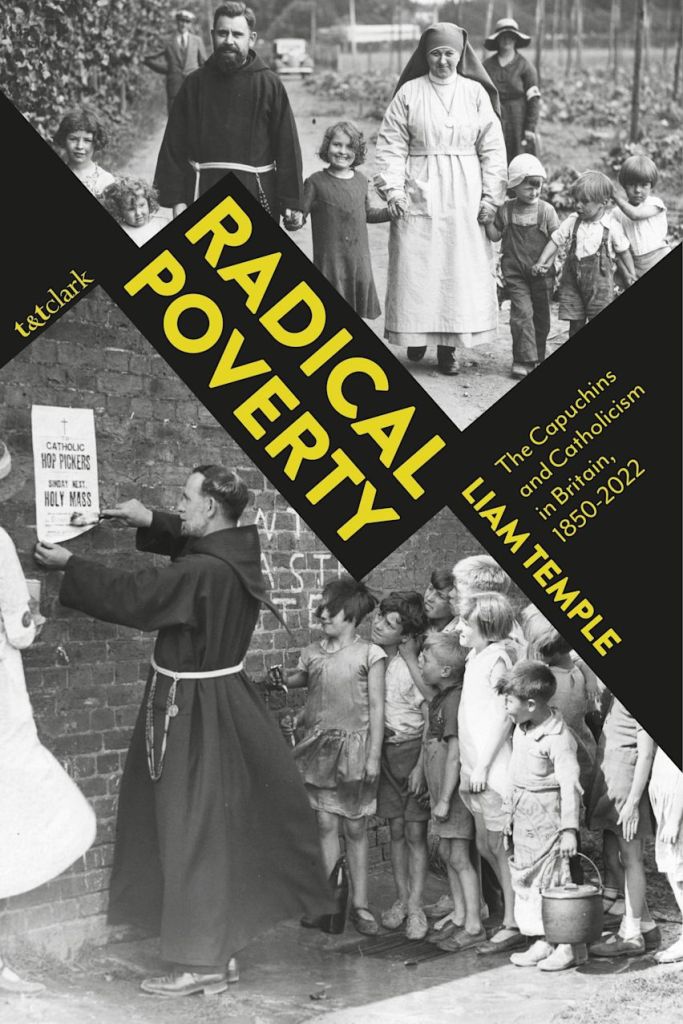
Every so often a historian gets a dream opportunity: to explore an archive that no secular academic has been granted access to before. I was fortunate to be given such an opportunity for the writing of Radical Poverty: The Capuchins and Catholicism in Britain, 1850-2022, which was published with Bloomsbury in February 2026. The book was the result of a four-year post-doc at the Centre for Catholic Studies, Durham University, that was generously funded by the Capuchins of Great Britain.
The book was written at their invitation but without conditions, and as a result from 2021 onwards I was given unrestricted access to their archives to explore however I judged best. Working with the friars on the project was an enjoyable and formative experience for me. We often discussed material I uncovered, and indeed they proved indispensable in the early days of the project in helping translate some of the more ‘in house’ language of religious life for me (the election of ‘Discreets’ and the limits of ‘active’ and ‘passive’ voice at the triennial ‘Provincial Chapter’ being prime examples!)
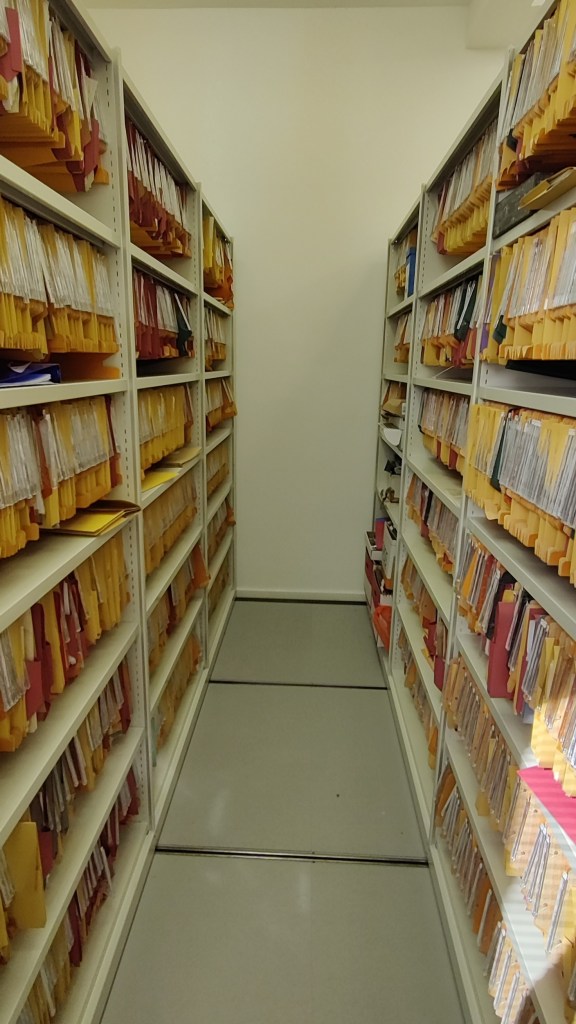
The archives were largely in a positive state when the project began: the room itself was securely locked, mobile shelving was installed, and measures in place for flooding etc. Some of the material, as pictured, had been neatly stored: files for each friar and presence in the history of the English Province existed, gathered by past
religious that served as archivists in some capacity. Like many similar collections, this had grown without any real foresight to its coherence, and many files thus overlapped in subject, topic and theme. A lack of a real catalogue meant they had to be methodically explored throughout the project.
Other material remained entirely unexplored and unsorted, however. Sermons, mission reports, logbooks, leadership meeting notes, historical annals, finance books, letters of past Provincials, newspaper collections and other material from closed friaries or deceased friars were all in the archives but not gathered or organized in any way. The bulk of my time was spent working through this material during monthly stays at the friary. Radical Poverty thus had an enormous amount of new archival material with which to underpin its conclusions and the opportunity to unearth new narratives about the previously unknown influence of the friars in Britain. As a result, it adds a new context to our understanding of issues such as anti-Catholicism, Catholic emancipation, the rebuilding of the Catholic Church in Britain, the giving of parish missions and retreats as works of religious renewal, the impact of Vatican II, foreign missions, and the decline of the religious orders in Britain in recent decades.
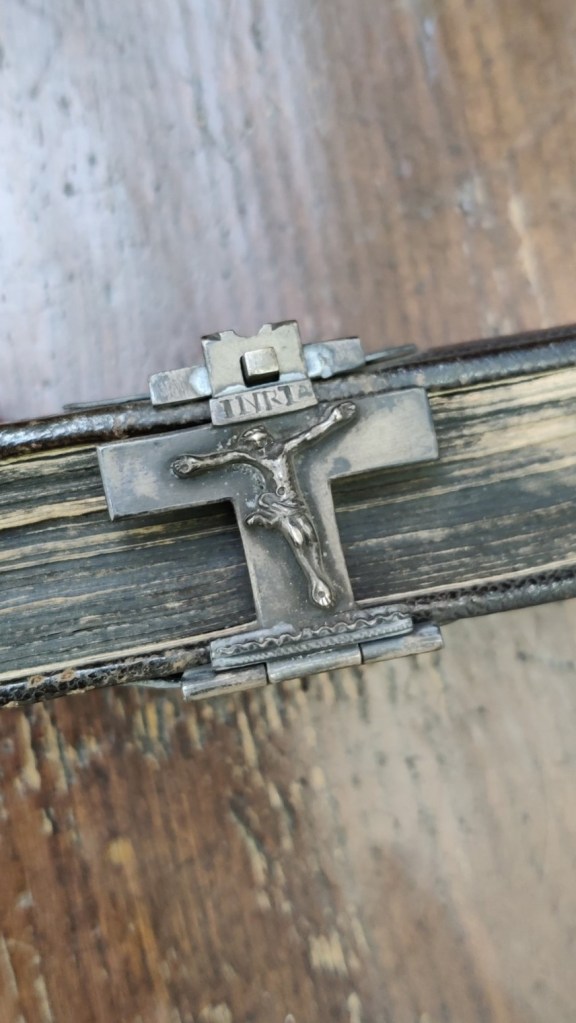
Conscious that I am a historian, not a trained archivist, I frequently sought advice from others within the Catholic Archive Society far more knowledgeable about conservation and storage when needed and sought to ensure material was stored correctly for future preservation, if not yet systematically archived and catalogued. My main hope is that the book inspires more projects about male religious life in the nineteenth and twentieth centuries in orders, congregations and institutes that have been little studied before. I also hope it could serve as a model for co-creation between religious and academics, one in which working together produces historical accounts infused with the insight of the religious themselves, while still being academically rigorous and underpinned by extensive archival research.
Radical Poverty is available from Bloomsbury here. Using the code GLR AT8 at checkout will give a 35% discount to the RRP.

 catholicarchivesociety.org